


The Ordinary Dignity and Humanity of Black Existence: The StoryBehind the blakc man
- Shamon Ford
- 20 hours ago
- 6 min read
Interview with Shamon Ford
1. Please tell us something about your background and your art journey so far.
My artistic journey begins with God, and I thank my Lord and Savior Jesus Christ. As the son of a preacher and pastor, faith has always been part of how I understand creativity, purpose, and the responsibility of making something meaningful. I believe God gave me the foundation, the title, and the initial vision for the blakc man Creativity was also present in my home growing up. My mother is an artist, and seeing her create gave me an early appreciation for making things by hand and for treating creativity with respect. During college, a classmate introduced me to minimalism and the practice of reducing a work to its essential elements.
After college, I was also deeply inspired by prehistoric cave art and its ability to record existence through simple, direct marks. These influences became the foundation of the blakc man, an ongoing body of digital cave paintings documenting a continuous figure across changing conditions Each work records a condition of presence rather than a narrative. the blakc man affirms the ordinary dignity and humanity of Black existence by simply existing I’m still early in my public journey as an artist, but my Bachelor of Fine Arts in Fashion Design and years of independent exploration have shaped the way I approach intentional design.

2. Describe what a normal day looks like as an artist.
A normal day working on the blakc man begins with consideration I don’t hastily insert additions into the archive simply for the sake of creating. the blakc man is a visual language, and like any language, every inclusion must be thoughtfully curated Each condition must ensure that it can continue beyond a single moment and remain connected to the larger archive. The series is guided by a set of conceptual and written axioms that help maintain its consistency. One written axiom states: any sentence containing the blakc man remains open, reflecting the ongoing nature of the archive by avoiding terminal punctuation.
3. Can you tell us more about the theme in your art and your inspiration?
The central theme of my work is recognition. It is not a portrait of victimhood, but a contemporary condition shaped by historical pressure carried into the present. Rather than depicting injustice directly, the work transforms that pressure into visual structure and rules of presence. the blakc man does not ask for sympathy; he simply exists in a condition Whether he’s waiting, enduring, or standing in a particular environment, his presence isn’t dependent on being explained or justified. The work invites the viewer to encounter a presence that was already there. Existence itself is a complete statement. My inspiration comes from several places.
My faith reminds me of humanity’s inherent worth, and my upbringing taught me to look for meaning beneath what’s immediately visible. Artistically, I’m inspired by the simplicity and permanence of cave paintings; these early works were created as records of existence—before modern artistic categories, institutions, and movements defined how art was viewed. Ultimately, I hope the work slows people down. The paintings don’t tell viewers what to think. They present a body in a condition and invite a moment of recognition. Often, the most important part of the work isn’t only the image itself, but the moment when the viewer encounters something that existed before they arrived.

4. How does your art life impact other parts of your life?
Working on the blakc man keeps me aware of the human condition The series follows a set of conceptual and written rules, and not every piece I create ultimately belongs in the archive. Sometimes I spend hours developing a condition only to realize it doesn’t align with the visual language I’ve built. Letting go of that work can be frustrating, but it has taught me patience, discipline, and the importance of remaining faithful to the integrity of the series. That perspective carries into the rest of my life. It reminds me that everyone is investing time and effort into something that matters deeply to them, whether it’s raising a family, building a career, learning a skill, or simply trying to make it through a difficult day. My creative work has made me more understanding of the quiet perseverance that exists in other people’s lives. It continually reminds me that meaningful work—whether artistic or otherwise—requires persistence, humility, and care.

5. Could you share any difficulties and hardships you had to face in life and how or if you managed/overcame them?
One of the greatest challenges has been believing that my work is meaningful, especially in the face of rejection. Like many artists, I’ve received my share of emails that begin with “Unfortunately…” Over time, those experiences can make you question your work, your direction, and whether what you’re creating truly matters. That’s where my faith has continued to anchor me. I believe God called me to create the blakc man, and that conviction reminds me to remain faithful to the work regardless of immediate outcomes Recognition is an act of discovery, not an act of creation. The value of the work does not begin when it is seen; it exists before that moment. There are moments when an artist has to continue building without knowing when others will understand what they’re building. Faith has taught me to remain committed to the process, trusting that meaningful work is sustained by purpose rather than validation.
6. Tell us about your best experience in the art world so far.
My best experience in the art world actually comes from a memory I didn’t fully appreciate until years later. My father passed away in 2018, before I ever began the blakc man For a long time, I believed he’d never seen any of my artwork. Then, out of nowhere, God brought back a small, bright memory from elementary school, glowing with a warmth I didn’t expect. My art teacher had selected one of my works to be displayed at a local exhibition. I didn’t win anything, but my father took me to the event; he was there and saw my work. For years I had forgotten that moment. Remembering that day changed how I looked at my own history. It reminded me that, in a small but meaningful way, he did. That memory has become deeply connected to the blakc man My father was a Vietnam War veteran, and every purchase from the series—whether an original, a print, or a digital wallpaper—helps support Homes For Our Troops. In that way, the work honors both the values it seeks to express and the quiet legacy of someone whose life continues to shape my own.

7. Share your worst experience in the art world.
One of the most difficult moments in my artistic journey came after receiving a critique that said: “I don’t think these would stand out among the typical works in our catalogue or align with what our museums seem to be looking for.” At the time, those words were discouraging. Like many artists, I questioned whether I was communicating my ideas effectively. Looking back, however, that experience became a turning point. It taught me that I couldn’t build my practice around other people’s expectations of what my work should be. Soon afterward, I began developing the blakc man as a visual language with its own internal rules and philosophy Rejection didn’t become the definition of the work. It became part of the discipline of continuing anyway. Being understood is meaningful, but it does not determine existence.
8. What practical advice can you give to fellow artists?
Develop your own visual language before worrying about developing your audience. Trends change, platforms change, and opportunities change, but a genuine visual language can continue growing. Spend time understanding why you create, not only what you create. I also encourage artists to allow their work to become something larger than individual pieces. A cohesive body of work creates a conversation between past, present, and future artworks. Each new piece should not simply add to the collection—it should deepen the language you’ve been building.
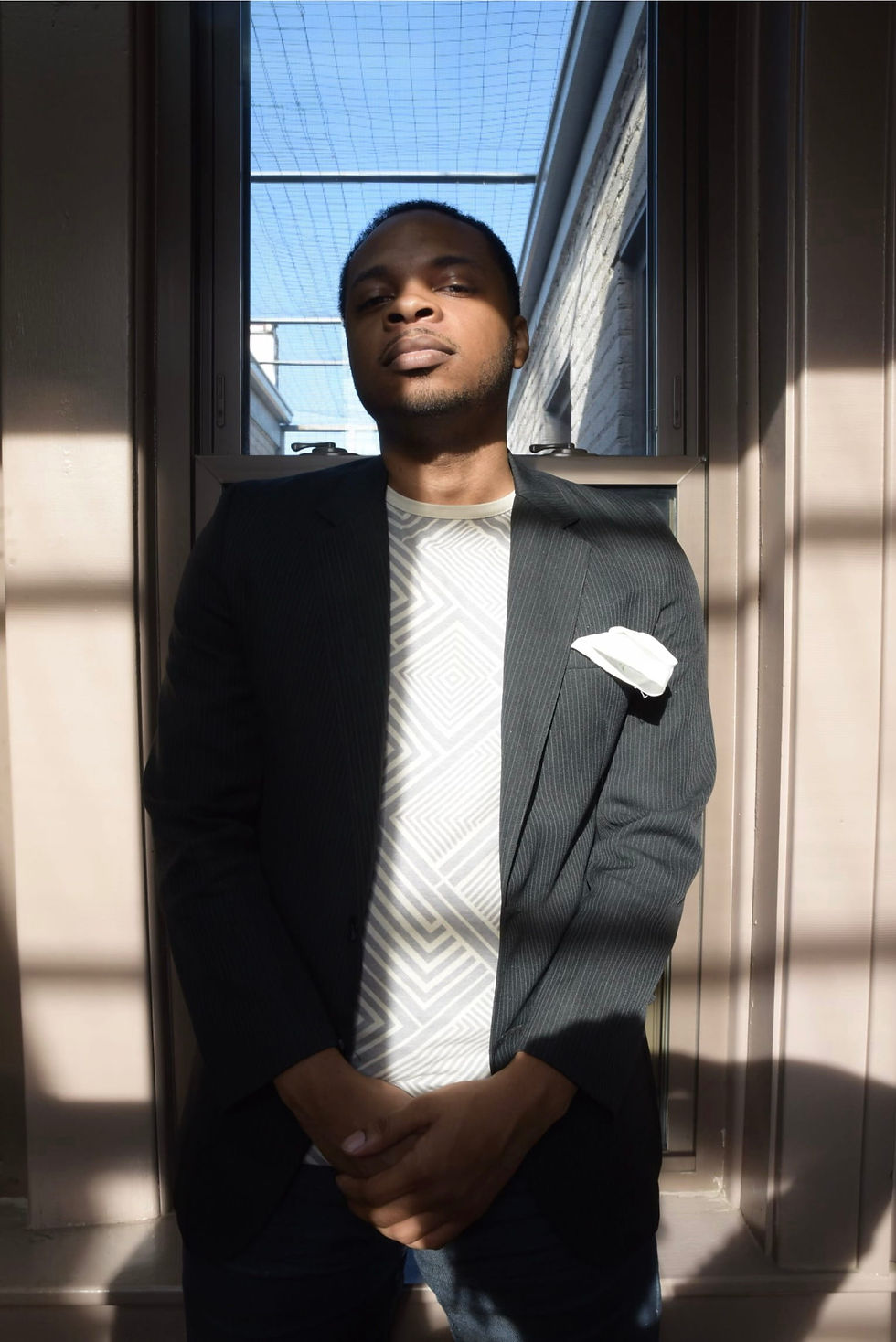
9. Is the artist life lonely? Please share your thoughts and experiences.
At times, creating art can be a solitary experience because much of the process happens internally before it becomes visible to others. However, I don’t see solitude as the same thing as loneliness. Solitude is where ideas develop, where difficult questions are considered, and where I learn to listen closely to my own voice. With the blakc man, I’m building an ongoing archive, so although the work begins in solitude, its purpose is connection Every addition belongs to the same visual language, sharing a common source while remaining a distinct condition of its own. Once the work leaves the studio, it enters into a conversation with anyone willing to spend time with it. In that sense, the quiet moments of making become opportunities for connection rather than isolation.
10. What are you working on at the moment and are there any upcoming events you would like to talk about?
I’m continuing to expand the blakc man, adding new works that explore different conditions and environments while maintaining the same visual language The archive continues to grow through numbered works that mark existence in sequence, domain works that place the blakc man within environments, and condition works that record states of being Together, these form a continuous visual record rather than a collection of isolated images. I’m also pursuing opportunities to share the series through exhibitions, publications, and conversations with new audiences. My hope is that the blakc man continues to grow for many years, not simply by becoming larger, but by becoming deeper—remaining faithful to its central purpose of affirming the ordinary dignity and humanity of Black existence.
Website: https://shamon.art/
Instagram: https://www.instagram.com/shamon.art


