


The Search for Human Connection
Interview with Mi Yan
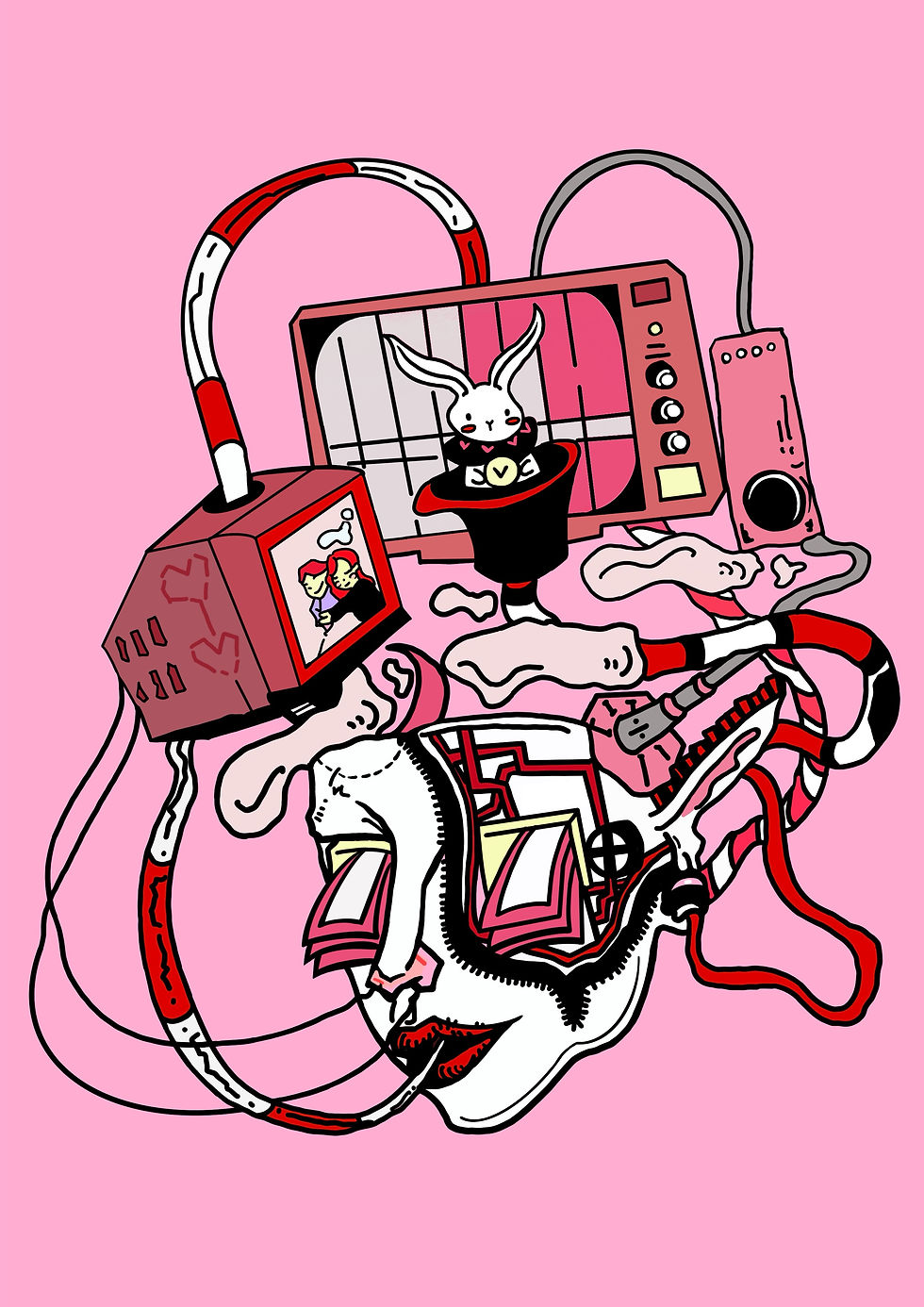
Perfect Robot is a speculative illustration project inspired by the rise of single-person households and the growing emotional needs of modern life. Through fictional advertisements and imagined companion robots, I explore how companionship may evolve as people increasingly seek comfort, intimacy, and emotional support in new forms. Although the project imagines a future shaped by robotics, it is ultimately about human loneliness and the enduring need for connection.

1. Please tell us something about your background and your art journey so far.
I am a visual artist and illustrator based in Wuhan, China. I studied Sculpture at Southwest University in Chongqing. My training focused on traditional clay sculpture, large-scale installations and mixed materials. My early work explored environmental and ecological issues. It also shaped my understanding of form, space and materials.
Later, I completed an MA in Design: Expanded Practice at Goldsmiths, University of London. The programme introduced me to research-led design and interdisciplinary practice. It changed the way I develop ideas. I realised that I was more interested in narrative illustration and moving image than conventional design. I enjoyed building stories, characters and fictional worlds.
After graduation, I worked in the UK film industry in prop making and graphic design. This experience deepened my interest in world-building. I became fascinated by how fictional worlds are constructed through research, visual details and storytelling. I also became interested in how visual narratives shape the way people understand reality. I started paying more attention to different perspectives rather than a single point of view.
Today, I mainly work with graphite drawing and digital illustration. My practice combines research, narrative illustration and world-building to explore how social, cultural, religious and technological systems shape identity, emotion and perception.
2. Describe what a normal day looks like as an artist.
If I'm working, I usually get up at 6:30 a.m., pack my bag and take my tools to work. After I get home, I like to watch films or TV series. Sometimes a funny scene or a line with a strong visual image will immediately catch my attention. I write it down in my notes, and if I can already picture it in my mind, I'll open Procreate and sketch it out.
When I have a weekend off or I'm between projects, I like to slow down. I'll take a notebook to the park, grab a cup of tea or coffee, sit for a while, daydream, and draw squirrels or plants. I enjoy recording small moments that happen around me.
I also love going on city walks. I usually listen to music while walking and observe people, buildings, and forgotten or randomly placed objects in the streets. I always find myself looking for hidden connections between them. I'll usually pick up a croissant along the way too.
In the afternoon, I usually go for a run or take a CrossFit class. I enjoy the intensity of exercise because it brings me back to reality. My mind spends a lot of time wandering, so movement reminds me that I'm physically present.
If my friends are free in the evening, we'll have dinner together, enjoy a drink, and I'll cycle home afterwards.
I don't think creativity only happens when I'm sitting at a desk drawing. For me, it happens while I'm walking, listening to music, observing people, or simply daydreaming. Most of my ideas begin long before I start making a drawing.
3. Can you tell us more about the theme in your art and your inspiration?
My work explores the relationship between society, culture, technology and the individual. I usually begin with real social phenomena. I use research and narrative illustration to build imagined worlds that still feel familiar. I am curious about the hidden connections between things that seem unrelated. I also explore how these connections shape identity, emotion and perception.
My inspiration comes from everyday observations, social news, books, films, games and real interviews. I rarely begin with a story. Instead, I begin with a question that grows out of something happening in the real world. I collect references, record ideas and gradually connect them until a narrative begins to emerge.
The Perfect Robot series is one example of this process. The project grew from my interest in the rise of single-person households, declining marriage rates and the increasing role of technology in emotional life. I researched news reports about companion robots, interviews with people who had purchased them, and documentaries exploring relationships between humans and machines. I was also inspired by Her, Westworld and Detroit: Become Human. These references made me question what people are really searching for. Are they looking for robots, or are they looking for lasting relationships where they feel understood and emotionally secure?
From there, I created a fictional robot company and designed a series of companion robots presented as commercial products. I was not trying to predict the future. Instead, I wanted to amplify social changes that are already happening today. Through world-building and narrative illustration, I invite viewers to rethink the relationship between technology, consumer culture and human connection.
4. How does your art life impact other parts of your life?
Becoming an artist has changed the way I see the world. I pay much more attention to everyday life than I used to. I enjoy looking for hidden connections between things instead of only thinking about cause and effect. I often bring together ideas from news, technology, films, mythology, religion and even tarot. They may seem unrelated, but I believe they all reflect how people understand and give meaning to the world. Many of my ideas begin with these unexpected connections.
This way of thinking has also changed how I look at art. I enjoy studying the work of other artists. I like discovering shared visual languages and similar ideas across different practices. I pay attention not only to what an artwork looks like, but also to the thinking behind it. Looking at art has become an important part of my own creative process.
It has also influenced the way I approach commercial design. Design usually needs to communicate a clear message and serve a brand or product. Art gives me more freedom to leave space for different interpretations. Different viewers can have different responses to the same work. I am still learning how to balance these two approaches. That balance continues to shape both my creative practice and the way I experience everyday life.

5. Could you share any difficulties and hardships you had to face in life and how or if you managed/overcame them?
One of the biggest challenges in my practice is balancing work and art. Making art takes time, energy and financial support. During quieter periods, I take part-time jobs to support myself and continue creating. I have never seen this as giving up on art. It simply allows me to keep making work.
Working full-time brings a different challenge. My mind easily shifts into "survival mode," and I find it much harder to develop new ideas. Instead of forcing myself to create, I write down keywords, quick sketches and references in my phone. I return to them when I have more time and mental space.
Creative blocks are also part of my practice. I have learned not to force creativity when ideas are not ready. Instead, I read, visit exhibitions, go for walks or talk to other artists. These experiences often lead to new ideas. When inspiration returns, I create a mind map and connect keywords, references and images. This is how many of my ideas slowly grow into finished projects.
6. Tell us about your best experience in the art world so far.
One of the best experiences in my art journey was volunteering at Bow Arts Nunnery Gallery in London. I found the opportunity by chance through an online job post. Looking back, it feels like one of those unexpected moments that quietly changed my path. It introduced me to the East London art community and allowed me to meet many inspiring artists. I enjoyed working behind the scenes and watching an exhibition slowly come together.
One moment has stayed with me ever since. In 2024, I assisted artist Mette Sterre during her performance G-string Theory at 125 Shaftesbury Avenue. I helped prepare her costume and supported the performance throughout the event. I was struck by how much attention she gave to every detail. Even the smallest decisions mattered to her. Watching her work made me realise that caring deeply about every part of a project is also part of being an artist.
After the performance, we talked about art and our different experiences. I do not remember every detail of our conversation, but I remember how she responded to my illustrations. She encouraged me to keep creating and to trust my own judgement. At that stage, I was still trying to find my own artistic voice, and her encouragement gave me the confidence to keep going.
Looking back, I realise that the most valuable part of the art world is not only the exhibitions or the artworks. It is the people you meet along the way. Sometimes a single conversation can stay with you for years and quietly shape the artist you become.

7. What practical advice can you give to fellow artists?
Stay confident, but stay curious too. Pay attention to what is happening in the world, but do not follow every trend. Read widely, look at different sources of information and learn to build your own judgement. Your perspective is more valuable than trying to sound like everyone else.
Keep talking to people about art, ideas and aesthetics. Some of the best ideas come from conversations and unexpected encounters. They can challenge the way you think and help you see your own work from a different perspective.
I also believe that qualities many people see as weaknesses can become strengths for an artist. Sensitivity, vulnerability and thinking differently can help you notice details, emotions and connections that other people might overlook.
Finally, be patient with yourself. If your art cannot support you financially yet, there is nothing wrong with taking a part-time job. Supporting yourself is not giving up on your practice. Keep creating, stay true to yourself, and never lose sight of why you started making art in the first place.
8. Is the artist life lonely? Please share your thoughts and experiences.
I do think an artist's life can be lonely. Most creative work happens when you are alone. However, I do not see loneliness as a negative thing. It gives me time to think, reflect and simply be with myself. Most of my ideas do not appear suddenly. They grow slowly through reading, walking, observing people, and simply letting my mind wander.
For me, having a daily routine is very important. I like to read, draw, go for a run, take long walks and then return to my work with fresh eyes. This rhythm helps me stay grounded. It also makes creativity feel like part of everyday life instead of something I have to wait for.
I also prefer quiet places. Too much noise makes it difficult to hear my own thoughts. At the same time, I do not think artists should isolate themselves from the world. I still spend a lot of time observing the world, talking to different people and learning from new ideas. Then I return to my own space and reflect on them. For me, making art is a constant movement between the outside world and my inner world. Somewhere between the two, I slowly find my own voice.
Social Media: @_secret_divergence


