


From Ink to Canvas: A Journey of Transformation
Interview with Gülşah Karaca
1. Please tell us something about your background and your art journey so far.
I was born in Istanbul in 1989. From a very young age, drawing, writing poetry, and inventing stories were natural parts of my life. Even before I had the language to call it “art,” it was already my way of expressing myself. I studied biology at university, and that experience profoundly shaped how I see the world. My fascination with nature, transformation, and living systems became one of the strongest foundations of my artistic practice, and traces of that influence still continue to appear throughout my work.

In 2014, I discovered tattooing, and it quickly became an important creative path for me. What fascinated me most was the idea of creating deeply personal, one-of-a-kind works that would live on someone’s body and move through the world with them. Since my tattoo work has always been custom-designed, each piece was created for one specific person and one specific story, existing only once. There was something incredibly moving about that kind of connection. Over time, my work gained international visibility, which eventually led me to move from Istanbul to Berlin in 2019 with my husband and our cat.
A year later, my life changed dramatically when I developed a serious spinal condition caused by the physical demands of tattooing. It forced me to completely rethink my relationship with both my work and my body. During that difficult period, returning to painting became part of my healing. What began as a few painful minutes of drawing gradually became a way to rebuild myself, both emotionally and creatively.
Since then, my practice has shifted. While tattooing remains part of my story, painting has become the center of my artistic life. After years of creating on living canvases, I now mostly work on still ones—and in that transition, I found a different kind of freedom. Art has always been important to me, but experiencing its healing power so personally changed my relationship with it forever.
2. Describe what a normal day looks like as an artist.
A normal day for me is one where I can stay connected to my routines—the small rituals that help me feel grounded, focused, and creative. I love quiet mornings, and usually, my cat decides when the day begins. Coffee, writing, soft morning light, and a calm start to the day are things I value deeply, although some of the most inspiring moments also happen when life interrupts that structure. If I have tattoo appointments that week, naturally my schedule revolves around them, since that kind of work depends on another person’s time as well as my own. Otherwise, I usually begin in my studio with writing—especially morning pages—before moving into painting or sketching.
A normal day also includes an ongoing conversation with my inner voice. Some days it feels supportive, and some days much more challenging—but I think both are part of the process.
3. Can you tell us more about the theme in your art and your inspiration?
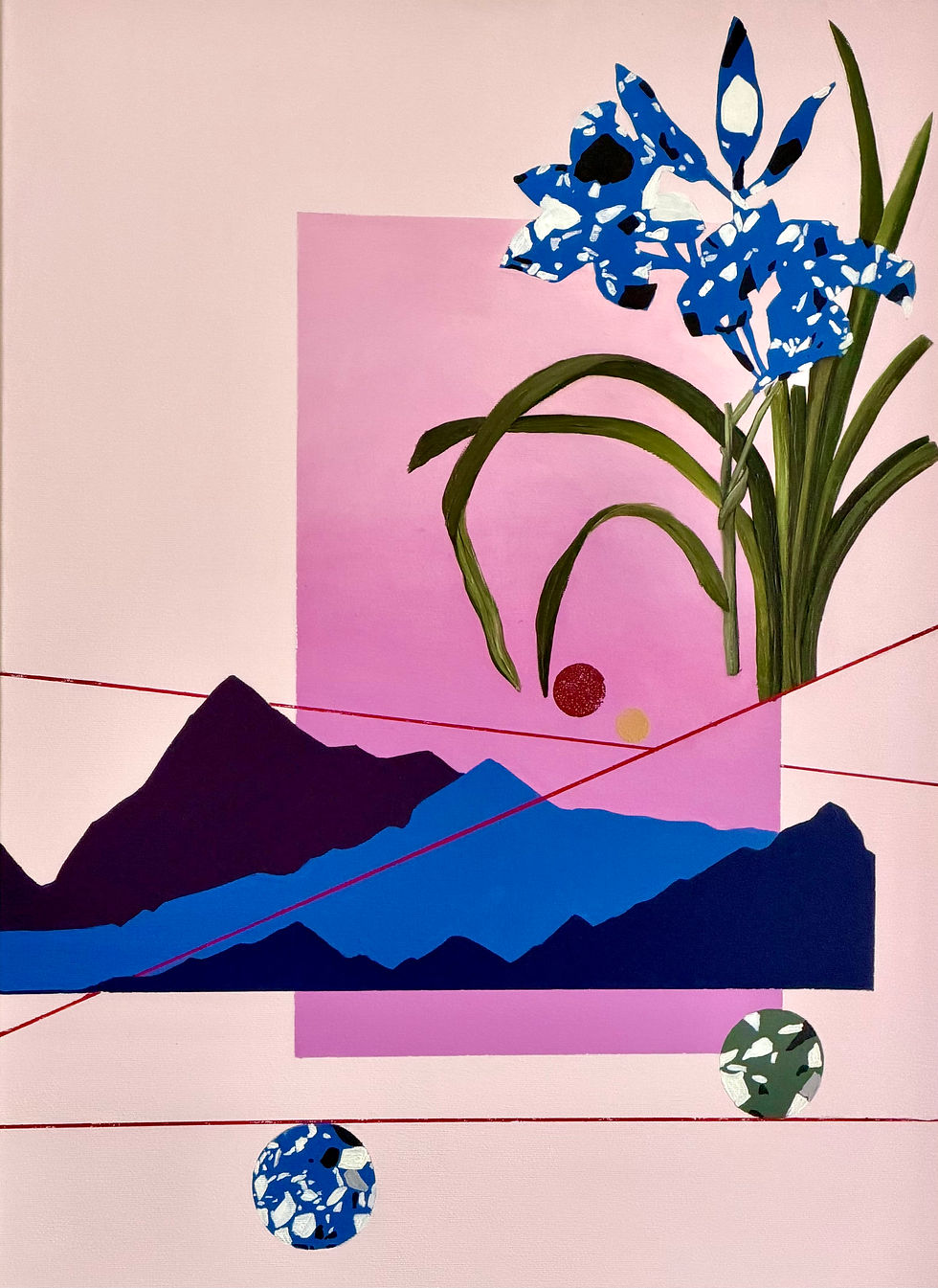
Biology has deeply shaped the way I see the world, so naturally, it also shaped my artistic language. I’ve always been fascinated by the intelligence of nature and the incredible systems that allow life to exist in such complex and unexpected ways. Learning about them made me feel both humbled and endlessly inspired. Because of that, nature is almost always present in my work in some way. Sometimes very directly, sometimes more subtly—but it’s always there. I’m often inspired by simple moments of observation. Seeing a tree species I’ve never encountered before, an unusual plant, a bird, or even just the atmosphere of a new place can suddenly make me want to stop everything and start creating. That’s probably why I usually travel with more art supplies than clothes.

4. Could you share any difficulties and hardships you had to face in life and how or if you managed/overcame them?
One of the biggest hardships I’ve faced was dealing with a serious spinal condition. For someone whose work and income depended so much on working with their hands, that kind of change forces you to question not only your body, but also your identity and the life you’ve built around it. At first, I saw it only as a loss. But over time, I realized that being forced to change also opened unexpected creative doors. It pushed me to discover different ways of creating, different rhythms, and different versions of myself. I think what helped me manage that was realizing that my need to create was always bigger than any one medium. Whether through tattooing, painting, writing, or something else, that impulse never disappeared. And in a strange way, what once felt like a limitation also became a kind of freedom.
5. Tell us about your best experience in the art world so far.
One of the most meaningful experiences in my art journey so far was my first solo exhibition, A Garden of One’s Own, which took place last year. After a very difficult period in my life, that exhibition felt like far more than simply showing my work—it felt like a personal milestone, a moment of closure, and the beginning of a new chapter. Standing there and seeing that I had built something beautiful after such a challenging time was incredibly emotional and unforgettable.
6. Share your worst experience in the art world.
One of the most frustrating experiences in the art world is seeing how often the line between inspiration and copying blurs. Being inspired by other artists is a natural and important part of creativity—but directly replicating someone’s ideas, visual language, or concepts is something very different. Unfortunately, this seems to have become even more common over the years, especially in the age of social media, where originality can sometimes be undervalued in favor of speed and visibility. And sadly, I know this is not just my experience—it’s something many artists have had to face.
Website: https://www.gulsahkaraca.com/
Instagram: https://www.instagram.com/gullsahkaraca/


